Math & Science
Presentation -
Math & Science.ppt
Shelby Robertson -
rtitlc@mail.ucf.edu
Algebra Success Keys & Keys of Problem Solving
1673 Mason Ave.
Suite 207
Daytona Beach, FL 32117
Student Scenarios -
MathActivities.pdf
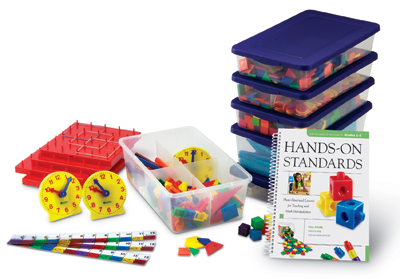
Geoboard Lesson:
- Distribute the geoboards to each pair of students ask them to make a triangle on the square side of the geoboard.
- Discuss the different sizes and angles in the triangles such as hold up a right triangle, acute triangle, and an obtuse triangle (hint: you may have to make one of these yourself so that students can see the difference).
- Introduce the vocabulary for the names of the triangles. Example: A right triangle has one right angle (makes a perfect corner) or 90 degreed angle. An obtuse triangle has an angle that is greater than a right angle or 90 degreed angle. An acute triangle is when all the angles are less than 90 degrees or less than a right angle. In addition, if the angles are all the same, these triangles are known as an equilateral triangle.
- Ask one student in each pair to place their fingers on the vertex or endpoints of their triangle. This would be the pegs on the geoboard. How many fingers do they have on the triangle?
- Ask the students to make a triangle that has a base of three pegs across and two pegs high.
- Ask students that have right triangle to stand up and show the rest of the class. Inform students that these triangles are congruent meaning they are exactly the same size and shape.
- Instruct one-half of the class to make a right triangle that is four pegs across and three pegs high and the other part of the class to make a right triangle that is three pegs across and three pegs high. Inform the class that these triangles are similar because they have the same shape, but not congruent because they are not the same size.
Virtual Geoboard -
http://nlvm.usu.edu/en/nav/frames_asid_282_g_3_t_3.html?open=activities
Fraction Bar Exploration:
- The fraction 2/8 equals which single fraction piece?
- The fraction 6/8 equals how many 1/4 s?
- The fraction 2/6 equals which single fraction piece?
- The fraction 4/6 equals how many 1/3 s?
- If you add 1/8 + 1/8 + 1/8, the sum is 3/8. If you add 3/8 and 2/8 what is the sum?
- Form a whole tower using six of the 1/6 pieces. Then remove (subtract) 1/6. What fraction of the tower is left?
Virtual Fraction Bars -
http://www.arcytech.org/java/fractions/fractions.html

Concrete - Representational - Abstract -
http://www.k8accesscenter.org/training_resources/CRA_Instructional_Approach.asp
CRA Instruction -
http://www.specialconnections.ku.edu/cgi-bin/cgiwrap/specconn/main.php?cat=instruction&subsection=math/cra
Math & Science Differences -
math and science difference.pdf
Using Manipulatives in Math -
Sharon-Fisher-Teaching-Math-Manipulatives.pdf
Basic Manipulative Materials -
Example Math Manipulatives.pdf
Making Science Labs Accessible -
science_lab.pdf
NEW - Algebra Support Tools -
http://algebrasupporttools.wikispaces.com/
FCAT Practice Tests
http://fcat.fldoe.org/fcatitem.asp
DOE State Adopted Materials
http://www.fldoe.org/bii/instruct_mat/catalog1.asp
Bureau of Curriculum & Instruction: Instructional Materials -
http://www.fldoe.org/bii/instruct_mat/
Florida Instructional Materials Catalog -
https://app1.fldoe.org/BII/Instruct_Mat/InstMatCatalog/
Math (from Exploring New Territories)
Start by looking at your state’s grade level expectations in math skills. The following are for Florida.
- Sunshine State Standards in Math - http://www.floridastandards.org/downloads.aspx
- FCAT Math Sample Tests - http://fcat.fldoe.org/fcatitem.asp
- FCAT Released Math Tests - http://fcat.fldoe.org/fcatrelease.asp
- Florida Alternate Assessment Sample Items - fl-alt-assessment-sample-items.pdf
Math Basics
- Enchanted Learning Math - http://www.enchantedlearning.com/math/ . basic math activities
- GPAT Assistive Technology Resource Chart for Math - http://public.doe.k12.ga.us/DMGetDocument.aspx/AT_Devices_to_Support_Math.pdf?p=6CC6799F8C1371F6FBF2132D40E80BD697253F95E5C6E3F845A8B0264B36AC54&Type=D
- LoTTIE Kit for Math - http://www.onionmountaintech.com/kit.php?id=15 . simple technology support for math
- FASTT Math – http://www.tomsnyder.com . software that targets the development of fluency in addition, subtraction, multiplication, and division
- Go Solve – http://www.tomsnyder.com . uses graphic organizers to help students plan for solving word problems in addition, subtraction, multiplication, and division (see illustration)
- Classroom Suite (IntelliMathics) – http://www.intellitools.com . includes animation, manipulatives, text-to-speech, and multimedia to demonstrate basic math concepts with multiple access options
- Kidspiration (Win . Mac) - http://www.kidspiration.com/Kidspiration . includes interactive visual math tools to help students learn basic math concepts
- Brainchild - http://www.brainchild.com/ . math assessment and learning tools
- That Quiz - http://www.thatquiz.org/ . online math assessment service
Calculators
- Big Calculator (Win) - http://www.sensorysoftware.com/bigcalculator.html . a free basic calculator that can be adjusted for really big buttons
- Metacalc - http://www.metacalc.com/ . free online calculator in various sizes
- ecalc - http://www.ecalc.com/ . free online calculator with basic, scientific, and unit conversion modes
- KoalaCalc (Mac) - http://www.macropodsoftware.com/koalacalc/index.html . free simple and scientific mode calculator
- MoffSoft FreeCalc (Win) - http://www.moffsoft.com/freecalc.htm . a great basic calculator with adjustable size and color schemes, and a simulated paper tape display
- Online Calculators and Algebra Tools - http://go.hrw.com/hrw.nd/gohrw_rls1/pKeywordResults?keyword=Mb1+Tools . several algebra support tools
- Calculate for Free - http://www.calculateforfree.com/ . extensive set of various calculation tools
- Calculator Collection from Edmark - Win / Mac09 . free calculator utility
- Broken Calculator – http://seeingmath.concord.org/broken_calculator . online simulation of a broken calculator. Students must think through how to solve problems using the keys available
Virtual Manipulatives/Simulations
- InspireData – http://www.inspiration.com . applies proven strategies of visual learning to data literacy
- Visual Fractions - http://www.visualfractions.com/ . includes online tools for learning fractions
- Illuminations - http://illuminations.nctm.org/ . a collection of online, standard-based virtual manipulatives and lessons
- NLVM – http://nlvm.usu.edu/en/nav/vlibrary.html . collection of online manipulatives and visualizations for all grade levels
- Explore Learning – http://www.explorelearning.com . extensive online set of mathematic simulations and visualizations (see illustration)
- SELECT Math - http://boston.k12.ma.us/teach/technology/select/index.html . aligns virtual manipulatives and visualizations with standards
- GeoGebra - http://www.geogebra.org/cms/ . virtual tools for geometry, algebra, and calculus
- Eduscapes - http://eduscapes.com/sessions/smartboard . includes links to a variety of simulations and visualizations
- Virtual Geoboard - http://illuminations.nctm.org/LessonDetail.aspx?ID=L554
- Geoboard from Edmark - Win / Mac09 . free geoboard with area and perimeter measurement tools
- Virtual Ruler - http://www.desktopruler.com/products-dr.htm
- Virtual Ruler by George - http://www.svet-soft.com/ruler.shtml
- Free Virtual Ruler - http://www.spadixbd.com/freetools/
- Virtual Protractor - http://www.downloadjunction.com/product/store/15482/index.html
Homework Helpers
- Free Online Graph Paper . http://incompetech.com/graphpaper/ . free online PDFs of various graph papers. includes an online generator so you can create customized graph paper and print it out
- GraphTablet (Win) - http://www.graphtablet.com/graphtablet.html . free graph paper printer
- Animated Math Dictionary - http://www.harcourtschool.com/glossary/math2/index_temp.html . provides written and audio definitions of math terms
- A Math Dictionary for Kids – http://www.teachers.ash.org.au/jeather/maths/dictionary.html
- Translating Word Problems - http://www.purplemath.com/modules/translat.htm . keywords to help with word problem translation
- MathWay - http://www.mathway.com/ . online tool for solving math problems
- WebMath - http://www.webmath.com/ . online tool that helps students solve math problems. from general math through calculus
- Algebra Help – http://www.algebrahelp.com/calculators . algebra support tool
- Conversion Tools – http://www.convertit.com . basic online collection of conversion tools
- Equation Wizard (Win) - http://www.equationwizard.com/ . algebraic equation solver software. trial version good for 30 equations
- Microsoft Math - http://www.microsoft.com/math/default.mspx . an all-in-one math homework solution. solve equations, graph functions, use a fully-functional graphing calculator, solve triangles, and convert standard units
- WebGraphing - http://www.webgraphing.com/ . online equation-graphing environment, from simple to advanced calculations
Accessibility Support
- MathPad & MathPad Plus - http://www.intellitools.com/ . support for doing arithmetic directly on a computer
- MathType - http://www.dessci.com/en/products/mathtype/ . full featured equation editor
- MathType Tips & Tricks - http://www.dessci.com/en/support/mathtype/tips/default.htm . helpful hints and ideas for using MathType
- Microsoft Office Equation Editor 2007 - http://blogs.msdn.com/microsoft_office_word/archive/2006/10/04/Equations-in-Word-2007.aspx . includes video examples of how to use the new equation editor in WORD 2007
- Scientific Notebook - http://www.mackichan.com/ . math writing environment for the computer
- MathTalk - http://www.metroplexvoice.com/ . speech-to-math processor. requires Naturally Speaking
- MathTrax - http://prime.jsc.nasa.gov/mathtrax/index.html . graphing software that works with screen readers like JAWS
- Accessible Digital Media Guidelines - http://ncam.wgbh.org/publications/adm/guideline_g.html . design guidelines for publications that include mathematical and scientific expressions
Science (from Exploring New Territories)
Start by looking at your state’s grade level expectations in science. The following are for Florida.
- Florida Standards Database - http://www.floridastandards.org/index.aspx
- FCAT Science Practice Tests - http://fcat.fldoe.org/fcatitem.asp
- FCAT Released Tests - http://fcat.fldoe.org/fcatrelease.asp
- FCAT SMART Notebook Practice Files - http://www.fsdb.k12.fl.us/rmc/training/smart.html
- Florida Alternate Assessment Sample Items - fl-alt-assessment-sample-items.pdf
Getting Started/Resources
- LearningScience - http://www.learningscience.org/ . online K-12 resource of free web interactives
- National Science Foundation's Multimedia Gallery . http://nsf.gov/news/mmg/index.cfm?s=2 . collection of images, video, audio, and more
- SCIRUS - http://www.scirus.com/srsapp/ . search online science content only
- Edheads.org - http://www.edheads.org . great interactive science activities
- Enchanted Learning Science Dictionary - http://www.enchantedlearning.com/science/dictionary/ . science for early learning
- edHelper - http://www.edhelper.com/ . collection of printable learning activities
- Science in the Home - http://www.ed.gov/parents/academic/help/science/science.pdf . a pdf resource for parents on helping children learn science
- Steps of the Scientific Method - http://www.sciencebuddies.org/mentoring/project_scientific_method.shtml . basic overview of the scientific method with a nice visual diagram of the process
- Science Fair Project Guide - http://www.sciencebuddies.org/science-fair-projects/project_guide_index.shtml . comprehensive set of resources to help students plan and complete a great science project
- Science in Action at Highlights - http://highlightskids.com/Science/h11FreeScienceTop.asp . lots of fun science experiments and activities .
Physical Science
- Motion Basics - http://www.physics4kids.com/files/motion_intro.html . an overview of the basics of motion . don’t forget that students can use text-to-speech tools to hear this content read aloud
- How Stuff Works - http://science.howstuffworks.com/physical-science-channel.htm . targets acoustics, energy, forensic science, nuclear science, optics, and physics
- Frank Potter’s Science Gems - http://www.sciencegems.com/physical.html . broad collection of links to physical science web resources
Life Science
- DNA From the Beginning - http://www.dnaftb.org/dnaftb/ . an animated primer on the basics of DNA, genes, and heredity
- DNA Interactive - http://www.dnai.org/ . lesson plans and classroom activities . free registration for teachers
Earth & Space Science
- Why Earth Science - http://www.agiweb.org/education/WhyEarthScience/Why_Earth_Science.pdf . a pdf resource on why earth science is important
- ToxTown - http://toxtown.nlm.nih.gov/index.php . a highly interactive resource on environment health concerns and toxic chemicals found in everyday life . from the National Library of Medicine
- Windows to the Universe - http://www.windows.ucar.edu/ . content lessons on our planet, solar system, and the universe. each lesson is available in 3 different reading levels and in English or Spanish
- Starry Night (Win . Mac) - http://www.starrynightstore.com/ . extremely realistic astronomy simulation software with activities for K-12
- Stellarium (Win . Mac) - http://www.stellarium.org/ . free planetarium for the computer
- WorldWide Telescope - http://www.worldwidetelescope.org/Home.aspx . a Microsoft project that uses telescopic imagery to put the universe at your fingertips
Virtual Labs / Simulations
- NASA Virtual Scanning Electron Microscope - http://learn.arc.nasa.gov/vlab/index.html . a complete simulation of a scanning electron microscope (see illustration)
- Virtual Chemistry Lab - http://www.chemcollective.org/applets/vlab.php . select from hundreds of standard reagents and manipulate them just like in a real lab
- ExploreLearning - http://www.explorelearning.com . extensive online set of science simulations and visualizations . each simulation can be used for free for up to 5 minutes per session
- NASA Science Simulation Activities - http://www.knowitall.org/nasa/simulations/science.html . basic simulations in a variety of areas of science
- Internet Based Simulations - http://www.csun.edu/science/software/simulations/simulations.html . a small collection of links to online science simulation activities
- Froguts - http://www.froguts.com/flash_content/index.html . virtual frog dissection software with an online interactive demo
- Virtual Chemistry - http://www.chem.ox.ac.uk/vrchemistry/ . a comprehensive chemistry website from the University of Oxford. LiveChem is an interactive chemistry experiment, where users choose items to mix, and videos display the reaction
- Interactive Periodic Table - http://www.chem.ox.ac.uk/vrchemistry/pt/ . periodic table with picture representation for each element (when available)
Technology Tools
- EyeClops - http://www.eyeclops.com/ . "toy" microscope that plugs into a TV or projector (see illustration)
- Digital QX5 Computer Microscope - http://digiblue.com/digital_blue/qx5.html . USB microscope for viewing microscopic organisms on a computer screen or projected on a large screen
- ProScope HR - http://www.theproscope.com/index.html . USB hand-held microscope
- Make Your Own Microscope - http://highlightskids.com/Science/TryThis/h3TT1108_waterMicroscope.asp . simple activity in which students create a microscope with a cup, plastic wrap, a rubber band, and some water
- ThermoWorks USB Data Loggers - http://www.thermoworks.com/products/logger/usb_logggers.html . portable usb data loggers that plug directly into a USB port
- LEGO Education Store - http://www.legoeducation.com/store/ . includes extensive products for math and science, including materials to address life science, simple machines, energy, and robotics
Tip - Need a quick way to enlarge small objects, plants, insects, etc.? Use a regular photo scanner. Place a transparency on the glass surface to protect it from any scratches and then place the object on the transparency. Lay a sheet of paper over the object you are scanning. Scan it into an image editing program at 600 dpi. You will then be able to view on screen, project, or print out a very large version of the scanned object.
